How to Choose a Nail Manufacturer in China: A Guide for Importers and Distributors
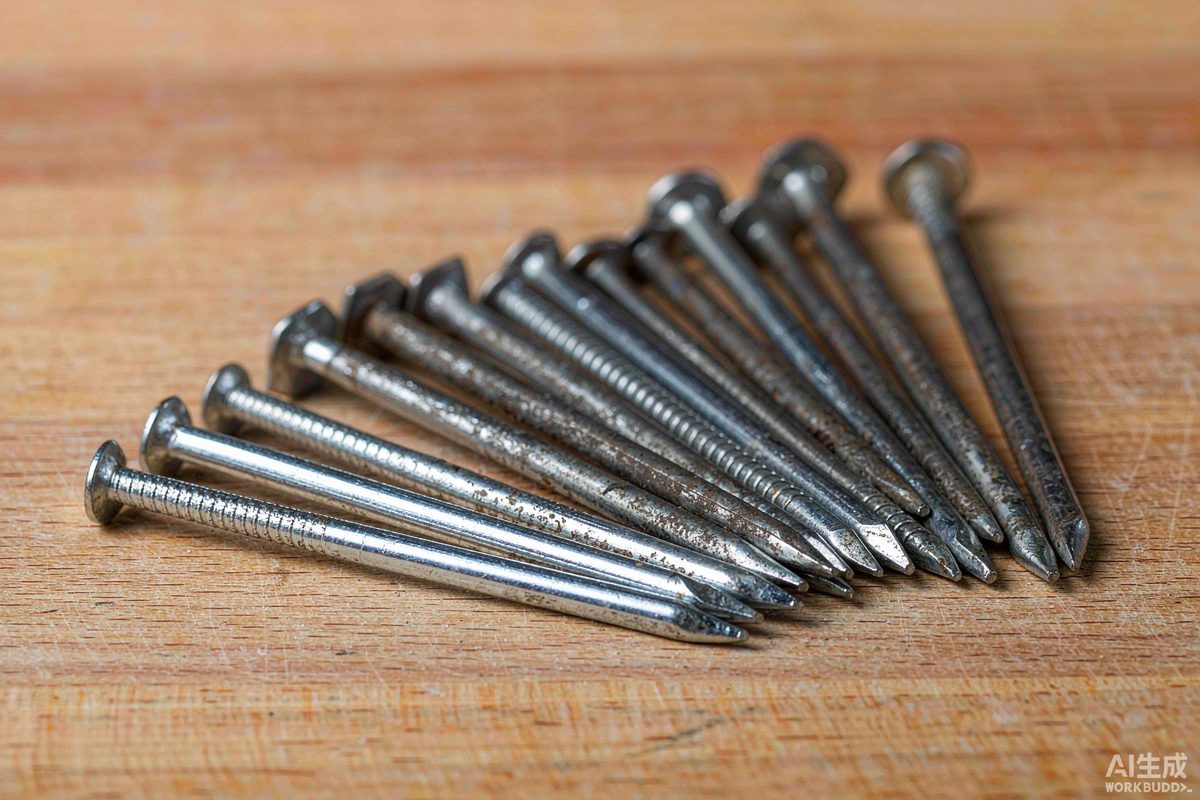
A nail manufacturer in China is a factory that draws low-carbon steel wire and forms it into nails — common, box, roofing, concrete, coil and specialty types — for export to importers and distributors worldwide. China's nail industry offers broad product range, flexible specifications and export-ready packaging. For buyers, the real task is not finding a factory, but selecting one whose quality control, consistency and communication match your market's requirements.

What Does a Nail Manufacturer in China Do?
A nail manufacturer converts steel wire rod into finished nails through drawing, heading, pointing and finishing. Beyond production, a full-service factory typically supports specification customization, OEM private labeling, pre-shipment inspection and container loading for export.
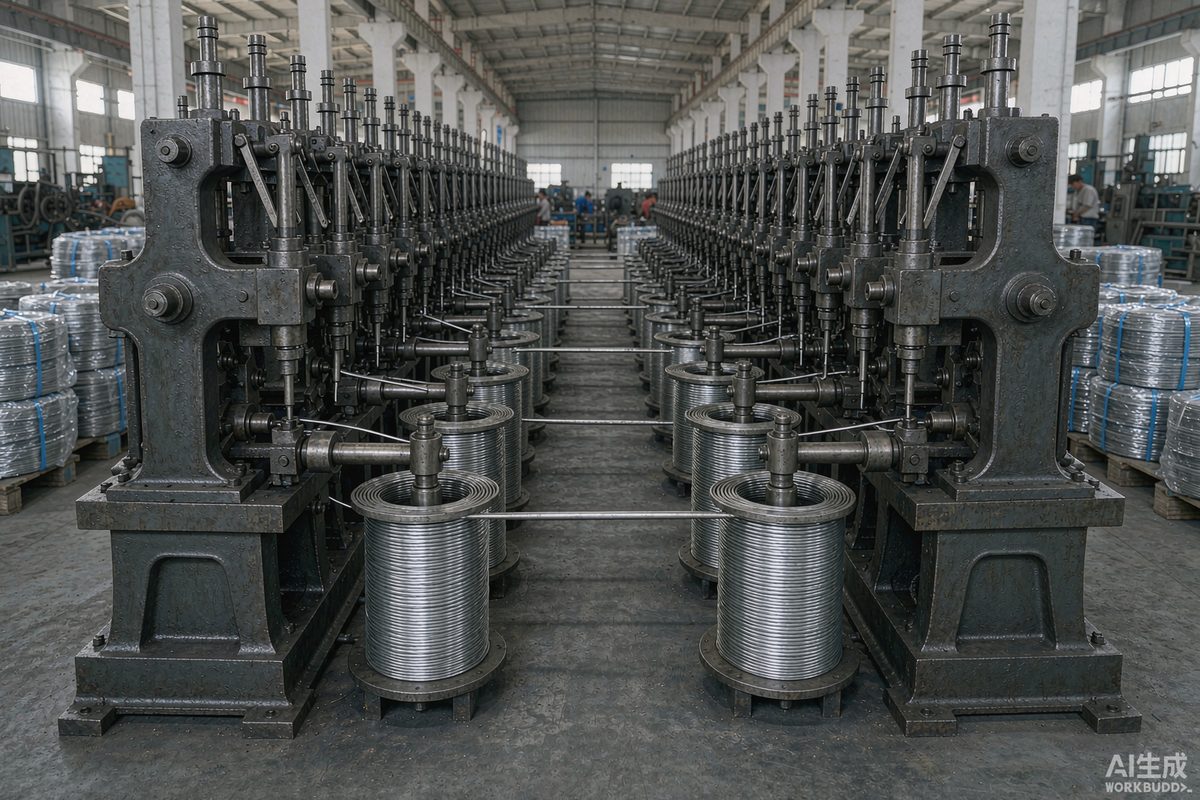
Most factories run multiple nail machines fed by in-house wire drawing lines, which gives them control over diameter consistency — the single most important dimension for count-per-weight accuracy. Manufacturers that also draw their own wire can usually respond faster to custom diameters than those buying pre-drawn wire. WANSUN works with low carbon steel wire supply chains to keep diameter control tight across product lines.
Why does this matter for buyers? Because "manufacturer" and "supplier" are used loosely in the trade. Some exporters are factories; others are trading companies sourcing from several. Understanding what a manufacturer actually does lets you ask the right audit questions before committing volume.
Why Source Nails from China?
Three factors drive most import decisions:
- Range and flexibility. A single Chinese factory can often produce common, box, roofing, concrete and ring-shank nails across many gauges and finishes.
- Export packaging and documentation. Established exporters are familiar with carton weights, pallet patterns, container loading and destination-market paperwork.
- Customization at volume. Private labels, retail boxes and non-standard sizes become economical at container-scale quantities.
Cost is a factor, but it should not be the only one. The lowest price per thousand can disappear if coating fails, diameters drift between batches, or lead times slip during peak season. Evaluate total landed cost and supply risk together.
How Are Nails Manufactured?
- Raw material selection. Low-carbon steel wire rod is checked for diameter and grade (commonly Q195/Q235 or equivalent).
- Wire drawing. Rod is drawn to the target gauge through successive dies; diameter control here drives weight-per-count.
- Nail forming. Machines cut, head and point the wire in one continuous operation.
- Heat treatment (selective). Ordinary wood nails ship in the drawn condition; concrete nails are hardened so points penetrate masonry.
- Surface cleaning. Lubricant, scale and dust are removed before coating.
- Surface treatment. Bright, electro-galvanized or hot-dip galvanized finishes are applied by the order.
- Inspection. Dimensional and coating checks against the specification.
- Packaging. Cartons with inner polybags, palletized for export.
What Types of Nails Do Manufacturers Produce?
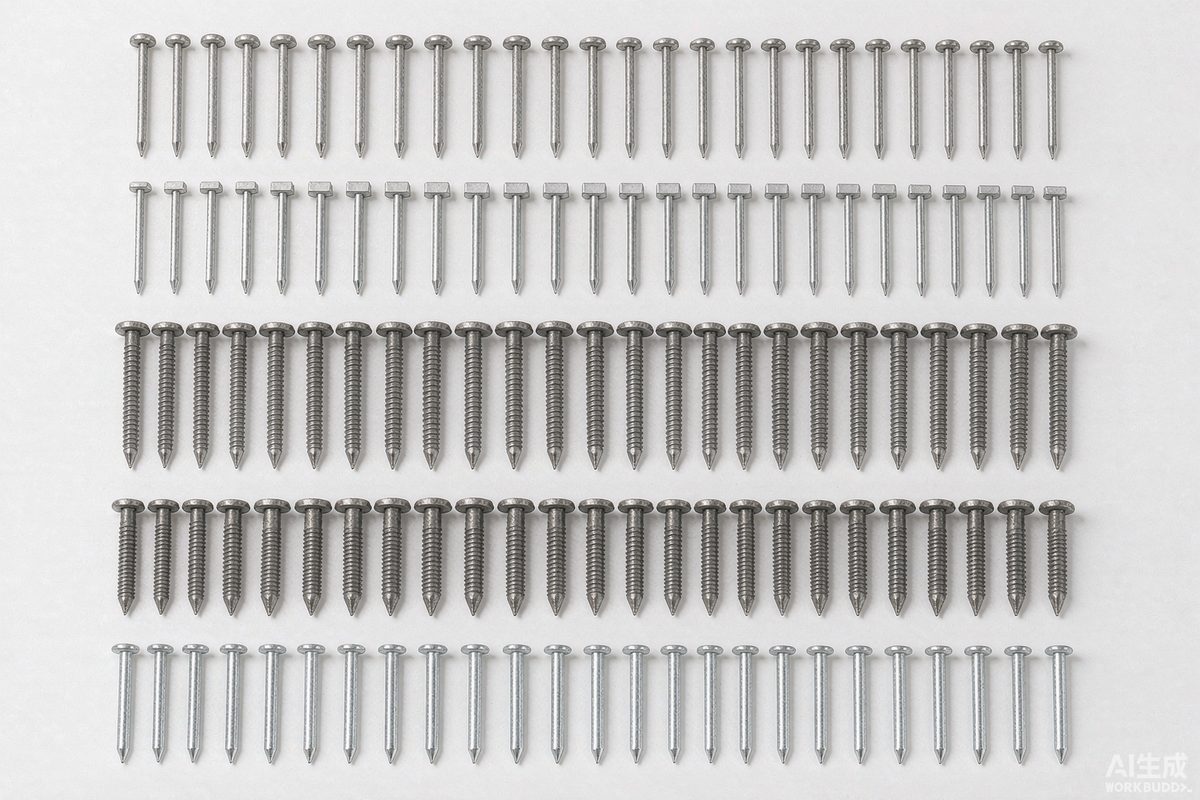
Common and Box Nails
The volume backbone of any factory. Common nails carry structural load; box nails use a thinner shank to reduce splitting in thin lumber. See common nails in bulk.
Galvanized Nails
Electro-galvanized for indoor/humid use; hot-dip galvanized for exterior service. Galvanized nail products cover both finishes.
Concrete (Masonry) Nails
Hardened, short, fluted or smooth shank for fixing to brick, mortar and light concrete.
Roofing Nails
Wide heads for shingles and membranes; often hot-dip galvanized or stainless for exterior exposure.
Coil and Collated Nails
Manufactured for pneumatic nailers — ring or smooth shank, collated in coils or strips for high-speed framing and roofing.
Ring Shank and Spiral Shank Nails
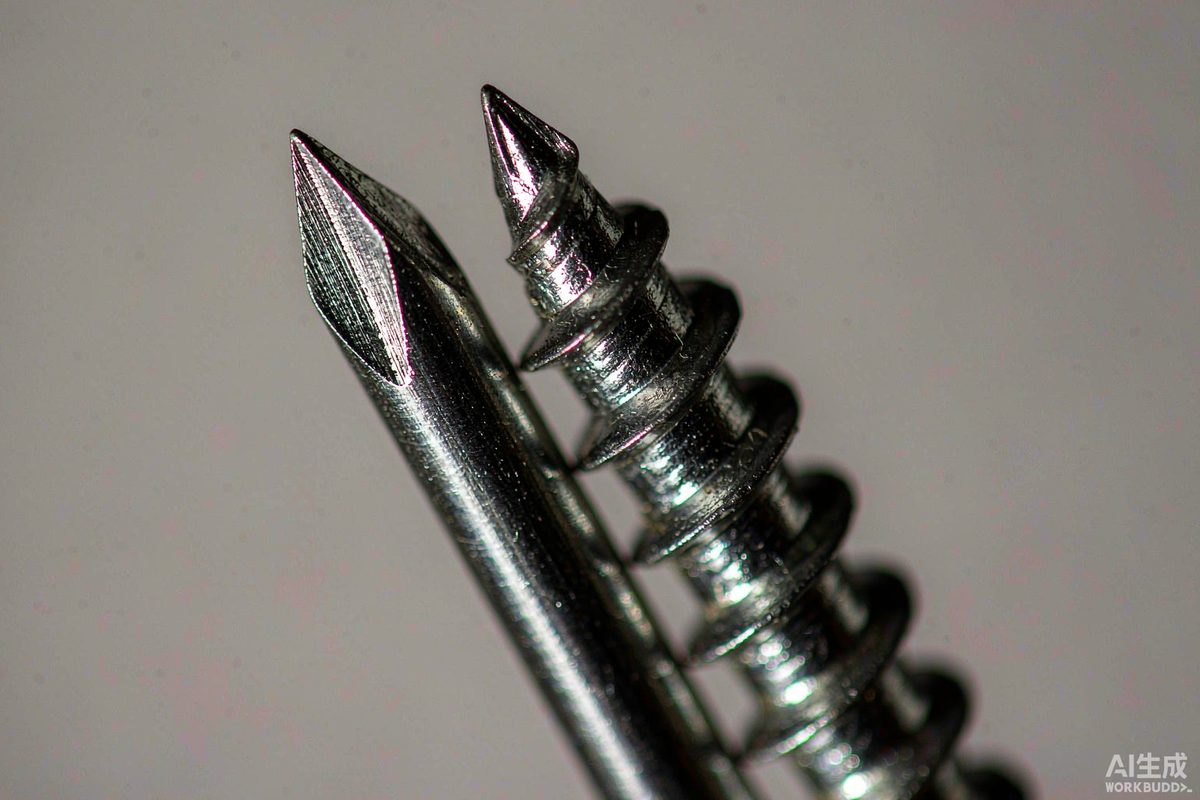
Deformed shanks for high withdrawal resistance in flooring, fencing and pallets.
Comparison of Main Nail Types
| Type | Material | Surface Treatment | Main Feature | Corrosion Resistance | Typical Application | Relative Cost |
|---|---|---|---|---|---|---|
| Common nail | Low-carbon steel | Bright, EG or HDG | High shear strength | Low–High | Framing, formwork | Low |
| Box nail | Low-carbon steel | Bright or EG | Thin shank, less splitting | Low–Medium | Boxes, thin lumber | Low |
| Galvanized nail | Low-carbon steel | EG or HDG | Corrosion protection | Medium–High | Exterior, humid | Medium |
| Concrete nail | Hardened steel | Blued or EG | Masonry penetration | Low–Medium | Fixing to concrete | Medium |
| Roofing nail | Low-carbon steel | HDG or stainless | Wide head | Medium–High | Shingles, felt | Medium |
| Coil nail | Low-carbon steel | EG, HDG, stainless | Pneumatic collation | Medium–High | Framing, roofing | Medium |
Common Applications
Construction and Framing
Dimensional lumber framing consumes common and box nails; pneumatic coil nails dominate professional framing crews.
Roofing
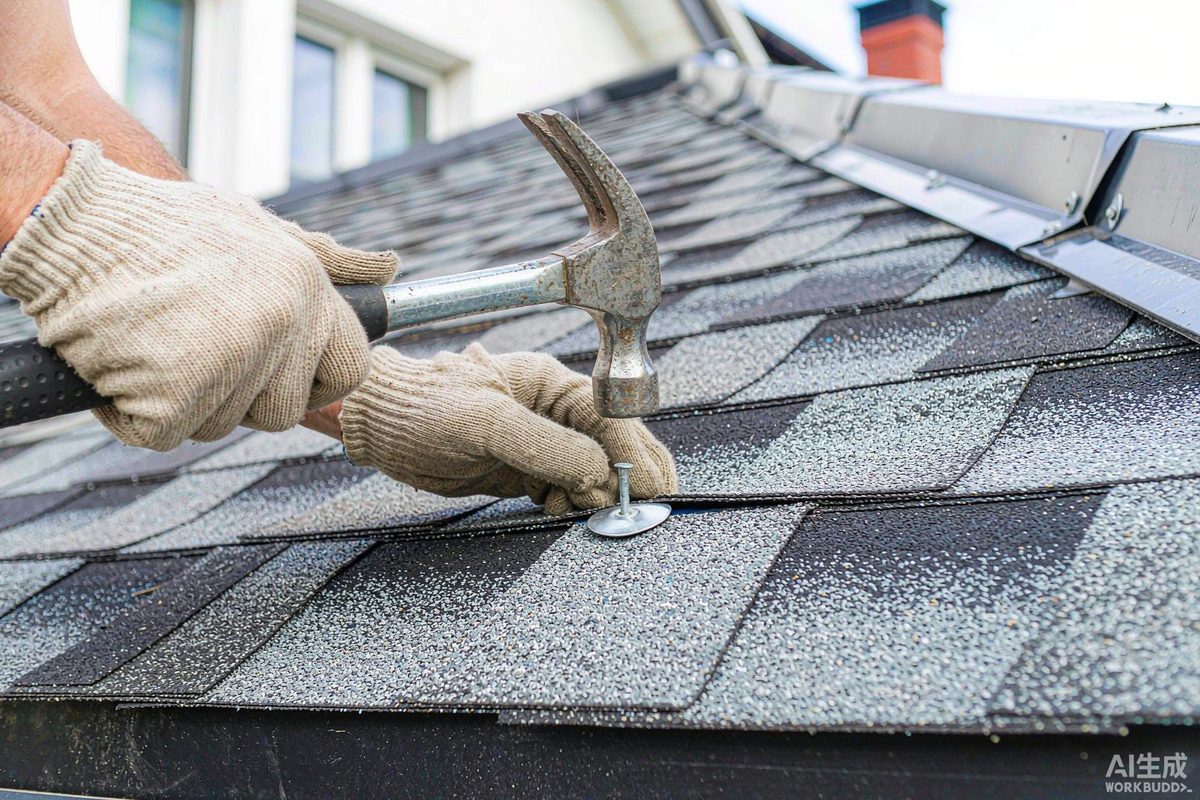
Wide-head roofing nails, usually hot-dip galvanized, fix shingles and underlayment. In wind zones, ring-shank roofing nails are specified.
Fencing and Outdoor
Ring or spiral shank with HDG or stainless finish resists moisture cycling. Pair with galvanized fence posts for a matched system.
Pallet and Packaging
Pallet makers favor specific shank and diameters; cost per thousand is decisive. Blued or galvanized finishes are common.
Industrial and Formwork
Duplex and concrete nails serve temporary structures and fit-out work.
What Specifications Should Buyers Check?
- Material — wire grade family or stainless steel.
- Length — inches and millimeters.
- Wire diameter (gauge) — BWG, AWG or millimeters.
- Head diameter and type — flat, countersunk, checkered or cupped.
- Shank type — smooth, ring, spiral or fluted.
- Surface treatment — bright, blued, EG or HDG, with coating class where specified.
- Coating mass/thickness — reference ASTM A641 (EG wire) and ASTM A153 (HDG fasteners) for applicable classes; confirm with supplier.
- Bending performance — US market references ASTM F1667; Europe references EN 14592 for timber fasteners. Requirements may vary by application, market and applicable standard.
- Tolerance — on length and diameter for automated equipment.
- Count per unit weight — to reconcile weight- and count-based quotes.
- Packaging — carton weight/count, pallet pattern, label requirements.
- Customization — private label, retail boxes, special heads.
How to Choose the Right Nail Manufacturer
- Define your product mix. Single-item containers are simpler; mixed containers need a factory with broad tooling.
- Confirm in-house capability. Drawing line + nail machines in-house usually means better diameter control than subcontracted production.
- Match finish to market climate. Hot-dip galvanized or stainless for exterior; bright only for dry indoor use.
- Check customization limits. Minimum order quantities apply to retail packs and special tooling.
- Review export experience. Container loading, documentation and destination-market familiarity reduce your logistics risk.
- Evaluate communication. Clear, specification-driven replies beat vague "we can do everything" claims.
- Plan lead time. Ask realistic lead times and whether safety stock exists for your diameters.
Factory vs. Trading Company
| Factor | Factory (Manufacturer) | Trading Company |
|---|---|---|
| Production control | Direct, in-house | Indirect, multi-source |
| Customization | Strong, tooling dependent | Flexible across suppliers |
| Price | Usually lower at volume | Includes service margin |
| MOQ | Higher for custom items | Often lower, mixed items |
| Quality consistency | Depends on its QC | Depends on chosen mills |
| Communication | Technical, sometimes language-limited | Commercial, export-oriented |
How to choose: Buy direct from a factory when you have a clear specification, steady volume and the QC to audit it. Use a trading company when you need mixed product ranges, lower MOQs or consolidated shipping across several suppliers. Either way, verify claims with certificates and samples.
How to Inspect Nail Quality
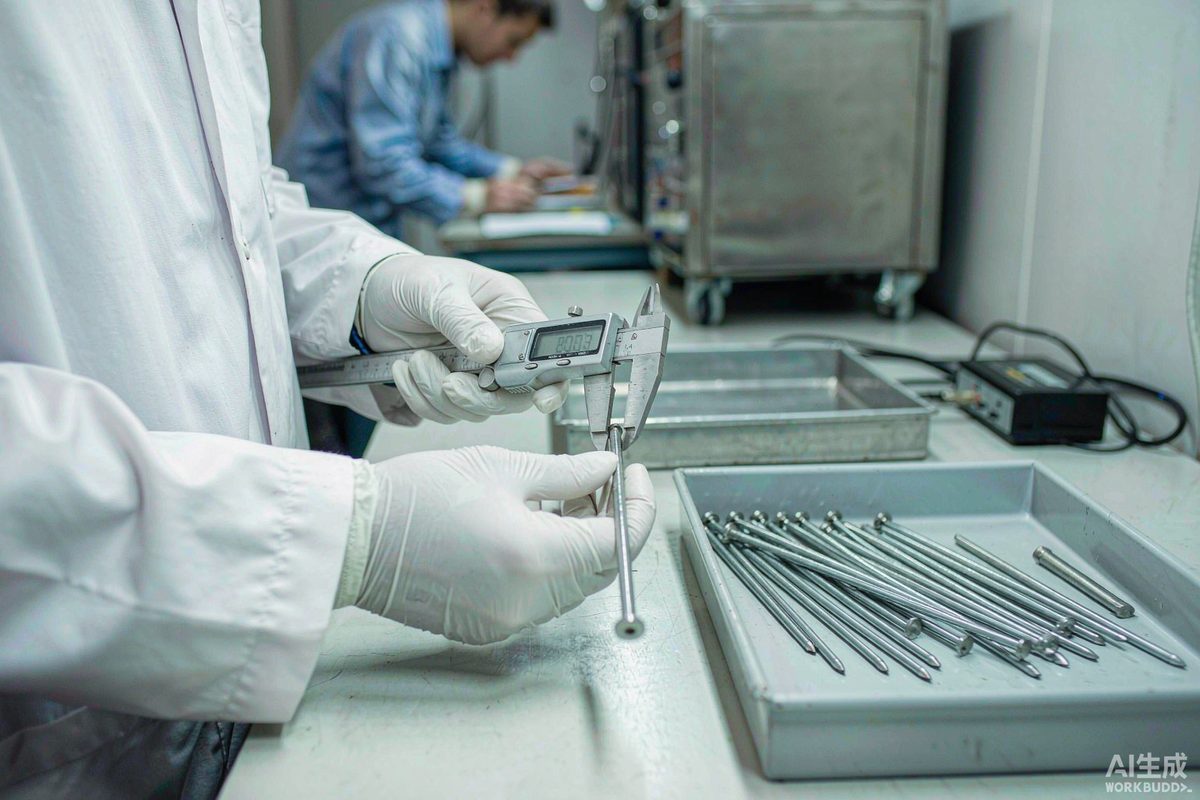
- Dimensional inspection — measure length, shank diameter and head diameter against tolerance.
- Surface inspection — check for rust, blunt points, incomplete heads, bent or mixed lengths.
- Material verification — review wire rod mill certificates; bend samples to check brittleness.
- Coating inspection — uniform coverage, no bare spots; verify coating class on certificate.
- Mechanical/performance testing — where ASTM F1667 or EN 14592 is referenced, witness or commission accredited tests.
- Installation test — drive samples into representative timber or masonry.
- Packaging inspection — carton strength, net weight, label accuracy, pallet pattern.
Dimensional, surface, installation and packaging checks suit pre-shipment inspection; material, coating and performance tests depend on contract terms.
What Information Should Be Included in an RFQ?
- Product type
- Material
- Dimensions (length and gauge)
- Head and shank details
- Surface treatment and coating class
- Required standard (if any)
- Packaging format and labels
- Order quantity and annual volume
- Destination port
- Intended application
- Drawing, sample or reference image
How to Choose a Reliable Nail Supplier
- Raw-material sourcing — traceable mills, mill certificates available.
- Manufacturing capability — in-house drawing and nail lines; gauge/length/shank range.
- Quality-control process — what is measured, how often, at which stages.
- Specification consistency — recent batch data for the same item; watch for diameter drift.
- Test reports — coating certificates and, where required, standard test reports.
- Sample availability — can they send the exact specification quickly?
- Custom packaging — retail boxes, private labels, mixed assortments.
- Export experience — container loading, ISPM-15 pallet rules where applicable, documentation.
- Production lead time — realistic, with safety-stock discussion.
- Complaint handling — agreed process for dimensional or coating claims.
Frequently Asked Questions
Are nails made in China good quality?
Quality varies by factory, not by country. A capable manufacturer with in-house drawing, documented QC and test reports can meet ASTM or EN requirements. Always verify with certificates and samples rather than assuming.
Factory or trading company — which is better?
Neither is universally better. Factories suit clear specs and steady volume; traders suit mixed ranges and lower MOQs. Verify whichever you choose with mill certs and pre-shipment inspection.
What standards apply to imported nails?
In the US, ASTM F1667 covers driven fasteners; in Europe, EN 14592 covers timber fasteners. Coating classes reference ASTM A641 and ASTM A153. Requirements may vary by application, market and applicable standard.
Can Chinese manufacturers do OEM and private label?
Yes. Most export factories support private labels, retail boxes and custom head markings at container scale, subject to minimum order quantities for packaging setup.
How do I verify nail coating quality?
Request the coating class on the mill certificate and, where contracted, commission a coating-mass test at an accredited lab. Visually check for bare spots and zinc lumps blocking the point.
What is a typical MOQ?
MOQs depend on item and packaging. Standard bulk items carry lower MOQs than custom or retail-packed nails. Discuss trial-order quantities openly with the supplier.
How can I get samples?
Send your specification and intended application, then request reference samples of the exact item. Standard items ship quickly; custom items may need a sample fee.
How are nails packed for export?
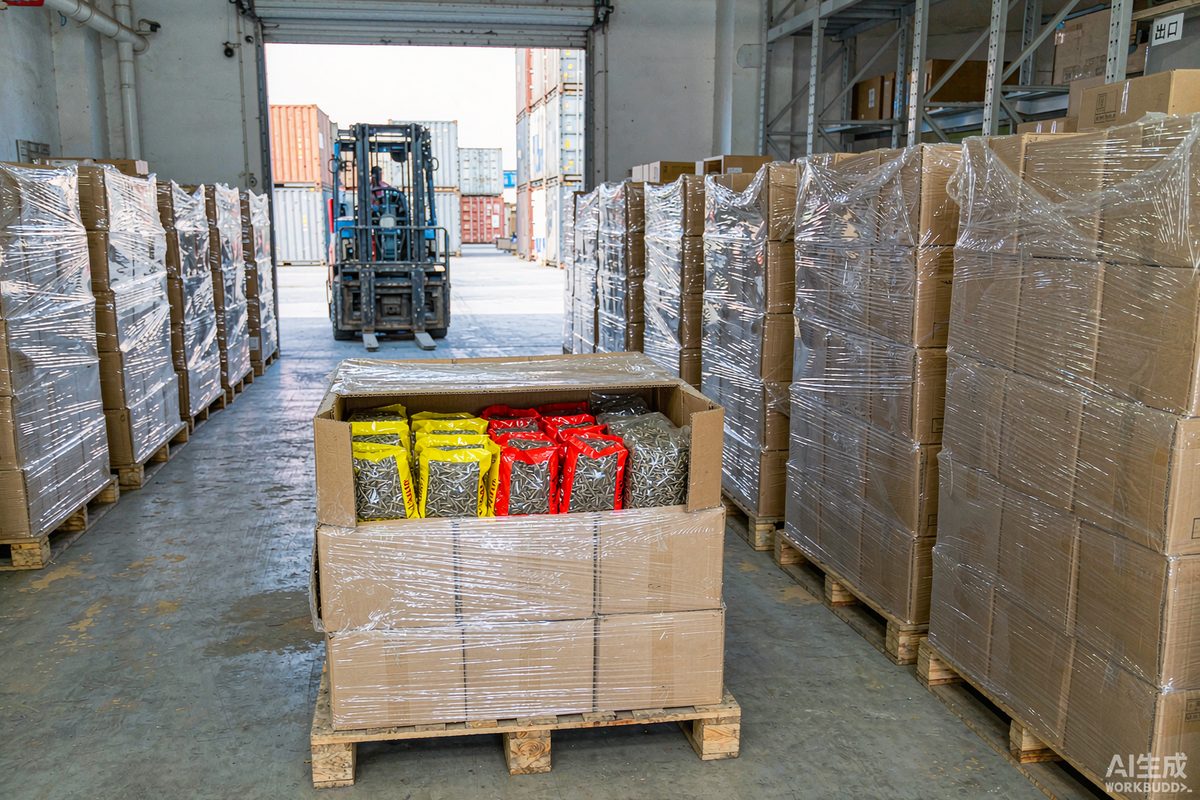
Typically bulk cartons with inner polybags, palletized for containers. Retail channels use printed boxes or headered polybags. Confirm carton weight, pallet pattern and labels at RFQ stage.
Source Nails from WANSUN
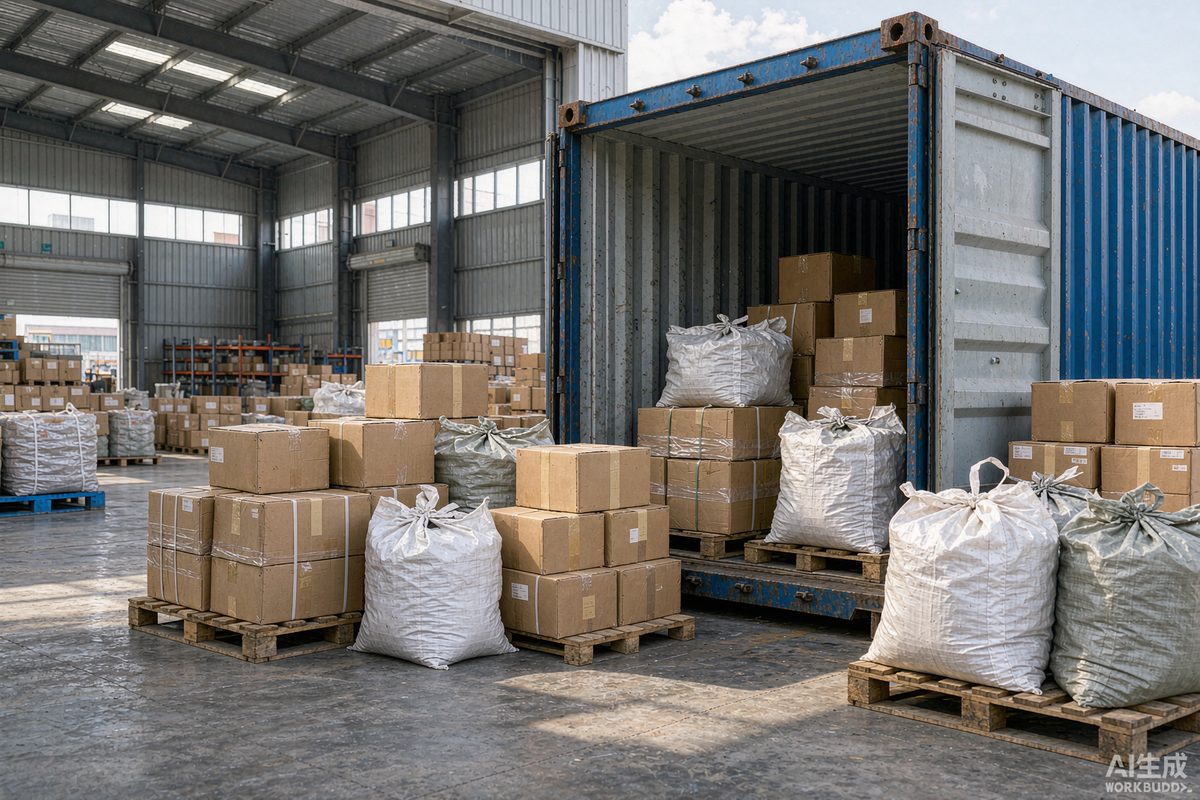
WANSUN, from Qingdao Wansun Technology Co., Ltd., is a manufacturer and exporter of nails, iron wire, wire mesh and fencing products serving importers, distributors and project buyers worldwide. We supply common, box, roofing, concrete, coil and ring shank nails across flexible lengths, gauges and finishes — bright, electro-galvanized and hot-dip galvanized. Specification customization, OEM packaging, pre-shipment inspection support and export-standard container loading are part of our service. Send us your product type, size, material, surface treatment, packaging, order quantity and destination port for a concrete quotation and realistic lead time.
Request a Quote | Send Your Specifications | Ask for a Sample | Contact WANSUN