
Building hardware may be the least glamorous line item on a construction bill of quantities, but it is one of the most consequential. Nails, binding wire, welded mesh, and fencing systems hold structures together, secure job sites, and protect completed works for decades. Choosing the wrong specification does not usually cause an immediate failure — it causes corrosion, pull-out, and costly rework years later. This guide walks buyers, contractors, and trading companies through the essential building hardware categories, the specifications that matter, and the quality checks that separate reliable suppliers from risky ones.
Why Building Hardware Specification Matters
Building hardware covers the small metal components used across construction, agriculture, and infrastructure: fasteners, wire products, wire mesh, fence posts, and fencing. Because these items are low-cost and high-volume, buyers often treat them as commodities. In practice, two batches of “galvanized nails” can differ in service life by a factor of ten depending on steel grade, coating weight, and manufacturing quality. A coastal project using lightly coated fasteners may see red rust within two years, while hot-dip galvanized components in the same environment can last twenty-five years or more.
Nails and Fasteners: Matching the Nail to the Job
Nails remain the most widely used fastener in wood construction worldwide. The key selection factors are shank type, surface treatment, and size:
- Common nails — thick shanks and flat heads for rough carpentry, formwork, and structural framing where holding power is the priority. See our common nails specification sheet.
- Roofing nails — wide flat heads with rubber or plastic washers to seal shingle and corrugated sheet penetrations against water, including coil roofing nails for high-speed installation.
- Coil nails — wire-collated nails for pneumatic nailers, used where speed of installation drives cost, such as pallet and truss production.
- Concrete and masonry nails — hardened steel shanks designed to penetrate brick and cured concrete.
- U-shaped staples and T-posts clips — for wire fixing, fencing fabric attachment, and upholstery work.
For exterior and humid environments, specify hot-dip galvanized or stainless steel. Electro-galvanized (electro-plated) nails are suitable only for interior, dry-service applications. Explore WANSUN's full range of nails and fasteners for spec sheets and packaging options.
Galvanized Wire: Coating Weight Is the Real Specification
Binding wire, baling wire, and fencing wire are usually sold as “galvanized wire,” but that single term hides enormous variation. What actually determines durability is zinc coating weight, expressed in grams per square meter (g/m²):
| Coating Class | Zinc Weight (g/m²) | Typical Service Life | Best Use |
|---|
| Electro-galvanized | 10-30 | 2-5 years | Interior binding, dry storage |
| Light hot-dip | 40-80 | 5-10 years | Temporary works, formwork ties |
| Standard hot-dip (A641) | 100-220 | 10-20 years | Fencing, general construction |
| Heavy hot-dip (A121) | 300-600 | 20-40 years | Coastal, marine, agricultural fencing |
Tensile strength matters as well: annealed (soft) wire from 350-550 MPa is ideal for hand tying rebar — see our black annealed wire and rebar tie wire — while high-tensile wire above 900 MPa is required for tensioned fence lines such as barbed wire. Always request a mill test certificate (MTC) confirming both coating weight and tensile values. See our wire products catalog for available diameters and coil formats.
Welded Wire Mesh: Weld Strength and Panel Geometry
Welded wire mesh (welded wire fabric) serves concrete reinforcement, enclosure panels, cages, and security screens. Three parameters drive performance: wire diameter, mesh opening, and weld shear strength. A mesh panel is only as strong as its welds — ask suppliers for weld shear test results, which should reach at least 60% of the base wire's tensile strength. Common configurations include 6x6 inch and 4x4 inch grids for slab reinforcement, and fine 1/2 or 1 inch meshes for animal cages and screens. PVC-coated mesh adds an extra polymer barrier for corrosive or decorative applications. Browse our welded wire mesh range and the full wire mesh catalog including galvanized before or after welding.
Fencing Systems: Buy the System, Not Just the Fabric
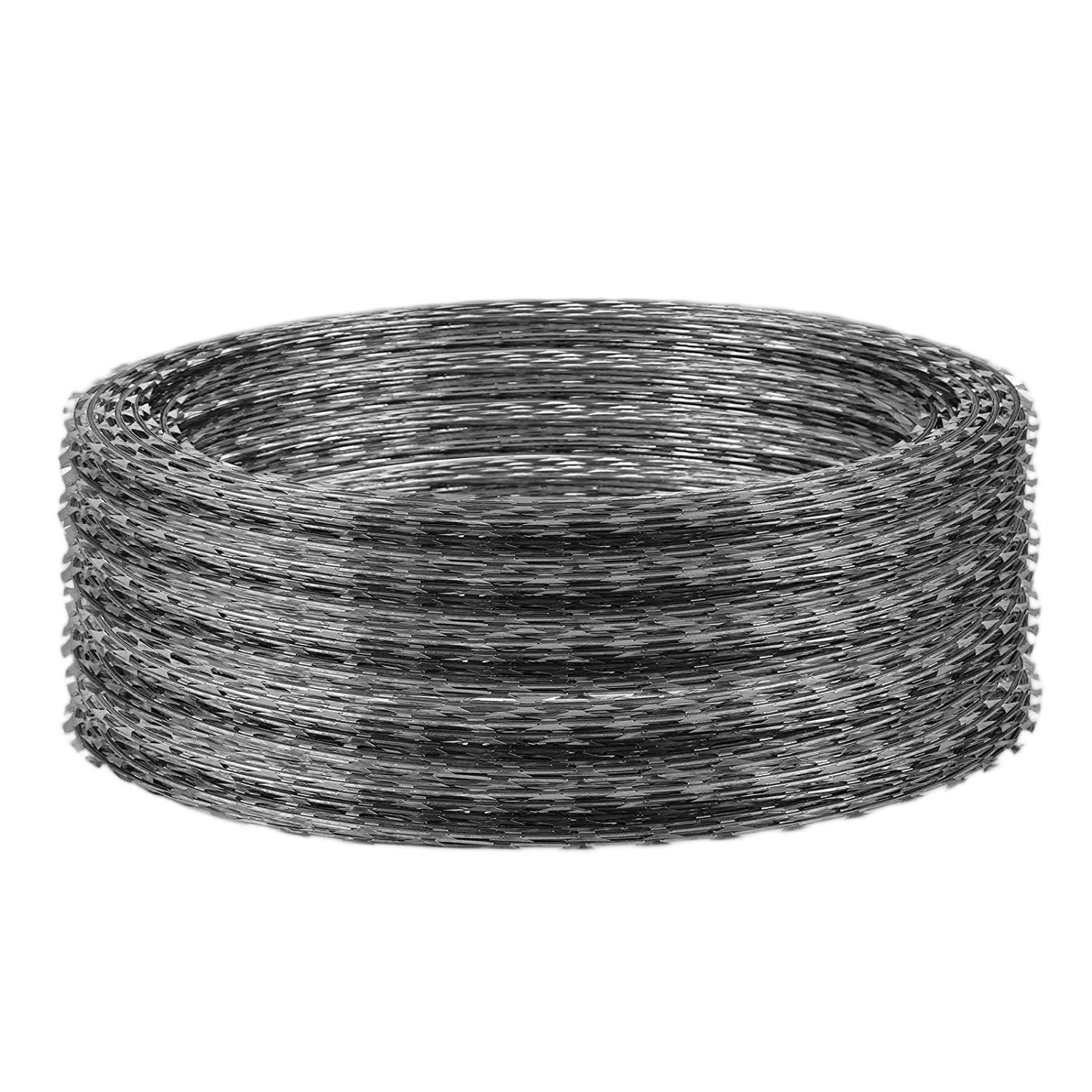
Fencing failures rarely come from the mesh itself — they come from mismatched components. A well-specified fence line matches fabric, posts, and fixings: T-posts or Y-posts driven at correct spacing, chain-link or welded fabric tensioned to specification, and galvanized or plastic-capped fixings at every attachment point. For agricultural and highway projects, consider the full fencing systems range, including chain link fence, field fence, razor wire for high-security sites, and temporary silt fencing for erosion control on construction sites.
Five Quality Checks Before You Place a Building Hardware Order
- Request an MTC (mill test certificate) with chemical composition and mechanical properties for every steel batch.
- Verify zinc coating weight by asking for salt-spray test reports (ASTM B117) or third-party inspection.
- Confirm the standard invoked — ASTM A641/A121, EN 10223, or GB/T — and that it matches your project specification.
- Sample-check nail shank diameter and head dimensions against declared specifications; undersized shanks are a common cost-cutting trick.
- Inspect packaging: moisture-proof export packing prevents white rust (wet storage stain) during ocean freight.
FAQ: Building Hardware Sourcing Questions
What is the difference between electro-galvanized and hot-dip galvanized hardware?
Electro-galvanizing deposits a thin, bright zinc layer (10-30 g/m²) suitable for interior use. Hot-dip galvanizing builds a much thicker metallurgically bonded coating (typically 100-600 g/m²) that protects steel for decades outdoors, including coastal environments.
What is the MOQ for OEM building hardware orders?
Typical MOQs run from 1-5 tons per item for wire and mesh products, or 1x20ft container for mixed hardware orders. OEM branding — printed cartons, private labels, custom packaging — usually requires a slightly higher first-order volume. Contact our export team for a quotation matched to your project schedule.
How are nails, wire, and mesh packed for export?
Nails ship in 20-25kg cartons or 500-1000kg bulk bags on pallets; wire in 5-100kg coils wrapped in plastic and woven bags; mesh panels in steel frames or wooden crates. All export packing is moisture-proofed for ocean container freight.
Which certifications should a building hardware supplier have?
At minimum, ISO 9001 for quality management. Product-level documentation (MTCs, SGS or BV third-party inspection reports, and salt-spray test data) matters more than wall certificates when evaluating actual batch quality.
Can WANSUN supply mixed containers of different hardware products?
Yes. Consolidating nails, wire, mesh, fencing, and posts in one container reduces logistics cost per ton significantly. Our team prepares consolidated packing lists and loading plans so buyers receive a single, inspection-ready shipment.
Conclusion: Specify Early, Verify Always
Building hardware rewards buyers who specify early and verify always. Define coating weight, tensile strength, and dimensional tolerance in your purchase order, demand test certificates with each shipment, and work with manufacturers who publish their standards. WANSUN Hardware supplies nails, wire, wire mesh, fencing, and fence posts to contractors and distributors worldwide, with full OEM support and export documentation. Request a quote and put a specification-grade hardware supply chain behind your next project.


